Sustainable Weight Loss How to Lose Weight by Improving Metabolic Health
Embrace sustainable weight loss

We often start our weight loss journey hoping for dramatic results in record time. But we’ve learned that slow, steady progress is far more effective for both our bodies and our minds. Sustainable weight loss is all about creating a balanced lifestyle that supports our metabolism without forcing us into extremes. According to guidance from the British Heart Foundation (2024), fast-fix fad diets may offer quick initial results but can be hard to maintain, often leading to weight regain and burnout.
Many fast-fix diets fail because they focus on restriction rather than supporting how the body actually works. Sustainable weight loss looks different. It focuses on improving metabolic health so weight loss can happen without constant effort or burnout.
Instead, focus on small, consistent changes that become second nature. Each step, such as swapping sugary drinks for infused water or taking ten-minute walks between work tasks, can add up to significant improvements. By aiming for around 1 to 2 pounds of weight loss per week, we build a routine that nourishes our energy and keeps us engaged for the long haul.
Recognise common pitfalls
We’ve all experienced setbacks along the way. For many of us, overly restrictive diets can trigger a cycle of binge eating and guilt. If we consume far too few calories, our metabolisms adapt, slowing weight loss and making it harder to feel motivated. We dive into the ways in which restrictive plans derail progress in our post on why diets fail.
Weight loss plateaus can also be a source of frustration. Sometimes our bodies simply need time to adjust, and other times we may unknowingly be eating more or moving less than we think. We explore these issues more deeply in weight loss plateau causes. Recognising these common obstacles can help us course-correct without self-blame.
Understand metabolic health
At the core of sustainable weight loss lies a balanced metabolism. Our body’s ability to use energy efficiently depends heavily on factors such as blood sugar stability and hormone balance. When we experience frequent spikes and crashes in our blood sugar, we’re more likely to face intense cravings and mood swings that derail our plans. To learn more about how blood sugar control aids weight management, explore our guide on weight loss and blood sugar.
By improving metabolic markers in a realistic way, for instance, increasing our daily fibre intake or focusing on moderate portion control, we build a system that continually works with us rather than against us.
Balance your nutrition
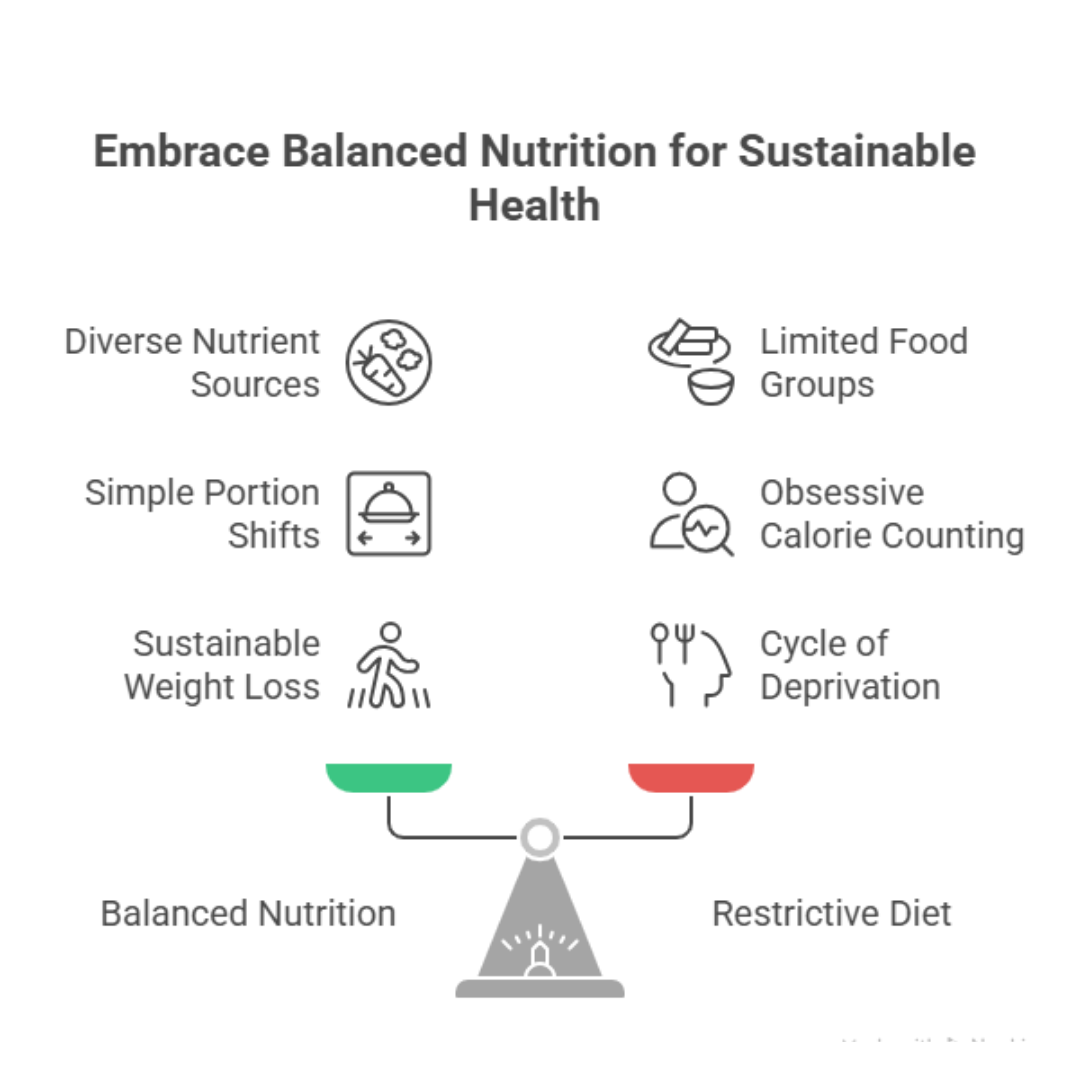
When we talk about balancing nutrition, we look to fundamental principles like increasing whole foods and avoiding ultra processed foods. Think rainbows of colours from fruits, vegetables, beans, whole grains, and oily fish as these provide diverse nutrients that promote stable energy and support heart health. Adding healthy fats, like those from nuts and olive oil, helps us feel satisfied while supplying beneficial fatty acids.
We also keep an eye on portion sizes. Even when a food is wholesome, too many sugars and starchy carbs can stall progress. Thankfully, we don’t need to obsessively count every bite. Simple shifts that consider when you eat as well as what you quantity of each food group you eat, can make the world of difference. By avoiding overly restrictive measures, we protect ourselves from the cycle of deprivation and overindulgence that derails sustainable weight loss.
Include regular exercise
Exercise isn’t just for burning calories, though that is a helpful component of our weight loss efforts. Staying active also improves mood, increases lean muscle mass, and boosts our overall metabolic rate. The NHS suggests at least 150 minutes per week of moderate-intensity activity, which we can break into smaller daily segments like brisk walks, cycling, or home workouts. Movement after meals (consider a walk or clearing up the kitchen after cooking), is especially valuable when it comes to reducing blood sugar levels and improving metabolic health which supports weight loss.
It's important to start slowly, adding short, low-impact sessions if we’ve been sedentary for a while. As we build strength and endurance, we incorporate interval training or light resistance routines. When approaching menopause or other hormonal changes, it can be beneficial to choose a program tailored for menopause weight loss. Some studies highlight that combining cardio and resistance training can help maintain muscle mass, which is critical for keeping our metabolism healthy and effective.
Adopt mindful habits
We’ve come to see that real change is about more than just food and exercise. Stress, poor sleep, and mental health challenges can significantly affect our appetite and how our bodies store fat. Embracing mindfulness techniques, like pausing before snacking to notice true hunger, or practising short meditations when stress hits, helps us stay in tune with our bodies and emotions.
Tracking our meals can also be a practical step, whether by jotting them in a notebook or using an app. This isn’t about obsessively counting calories, but rather understanding our food choices and recognising patterns that may be holding us back. Small adjustments, such as buying indulgent treats only when we’re ready to eat them, limit unconscious overeating. These mindful habits create a foundation where we nourish ourselves with compassion rather than punish ourselves with restrictions.
Plan your next steps
Our goal is to build a sustainable lifestyle that supports weight loss, better metabolic health, and enhanced overall wellbeing. We know sudden drastic measures can burn us out, so we value slow but meaningful progress. By adopting balanced nutrition, incorporating daily movement, and addressing stressors, we give our bodies the stability it needs to thrive.
If you’ve been feeling stuck or frustrated despite doing everything “right,” step back and reassess your approach. Perhaps you need to adjust portion sizes, revisit a stalled plan, or prioritise stress management. Ultimately, true success requires an ongoing commitment to listening to our bodies and making adjustments that feel achievable each week. We encourage you to stay patient, explore your emotional drivers, and welcome each small victory as a sign that you’re moving toward a healthier life.